6 generative engine optimization tools and platforms for agencies building GEO into the SEO retainer (2027)
Generative engine optimization tools for SEO agencies adding GEO: 6 LLM SEO tools and platforms compared, from a free first check to retainer tracking.
By Jonah Whitfield, Founder and Managing Director, specialist GEO/AEO agency ·

If you’re adding GEO to existing SEO retainers, open client conversations with a free AI visibility checker, AI Results Tracker, and run the retained line on SE Visible by SE Ranking, where I’d anchor client reporting. This AI visibility platform stores every answer next to the engine, market, and date it came from, and tracks daily by default. For rank-led reports, a rank-tracker-first pick among these generative engine optimization tools fits the existing report. Four LLM SEO tools then follow in order of need.
We got this wrong. Before 2024, when I was Head of Strategy at a 70-person performance agency, the first SEO client to ask “does ChatGPT recommend us?” got a screenshot and a shrug. The AI question shrank to one slide in the SEO report. The client stopped asking. Nobody had scoped it, so nobody owned it.
Digiday counted eight agencies, indie and holding-company shops, advertising director- or manager-level organic search roles as client demand for zero-click expertise grew. Below, you’ll find who this is for, the LLM SEO question clients ask, a comparison table, and six picks.
Who is this list for, and what does the GEO line have to deliver?
This list is for heads of strategy, SEO directors, and new-business leads at full-service or SEO agencies: 30-200 people, 20+ retained SEO clients, mostly B2B and considered-purchase brands in several markets. They sell rank tracking and monthly SEO reports and are adding LLM SEO services to those retainers. GEO-only shops are a different buyer.
70% of B2B marketers in Forrester’s community call AI visibility a top CMO or CEO priority, yet only 30% of companies have a discrete owner for answer-engine visibility. That gap belongs to the agency already holding the SEO retainer.
The line has to deliver:
- A first read per client before pricing: a GEO audit for the pitch.
- Client separation: prompts, competitors, and markets kept apart.
- The answer behind the number, ready when a CMO pushes back.
- A cadence, daily or weekly, written into the scope.
- Data out to the SEO report: Looker Studio, API, exports.
- Engines matched to the client’s buyers, add-ons priced in up front.
How I picked: I read vendors’ pricing and agency pages on October 18, 2027, ran free AI visibility checks on three prospect brands, and kept the generative engine optimization tools and platforms that met four or more needs.
Are LLM SEO tools just SEO tools with a new report?
No. LLM SEO tools, also sold as generative engine optimization (GEO) tools or GEO software, read AI answers instead of result pages: whether ChatGPT, Gemini, AI Overviews, or AI Mode name a client, beside which rivals, and which sources they cite. The SEO work still feeds them. The measurement changes, and so does the deliverable.
43% of SEJ State of Search respondents plan to invest in or prioritize GEO next year, yet only 14% count it among their strongest result drivers, and just 9% feel very confident measuring and interpreting AI visibility. Spending plans are running ahead of proof. The agency that measures it credibly owns the line.
What carries over: content, technical, digital PR, and entity work. What’s new in LLM SEO: a prompt set per client, answer-level evidence a CMO can open, AI share of voice against named rivals, and run-to-run variance stated in the readout.
If the client report is rank-led, an AI rank tracker on existing rankings can carry the first months.
How do six GEO tools and platforms compare for a retainer that already sells SEO?
The six options run in the order an agency builds the GEO line: a free look at each client, then generative engine optimization tools and platforms for retained work. Each row gives the option’s role, the AI engines its vendor names, client setup, data out, and pricing from vendor pages on October 18, 2027.
| # | Option | Role in the GEO line | Engines (vendor-stated) | Client setup | Data out | Pricing |
|---|---|---|---|---|---|---|
| 1 | AI Results Tracker | Pre-scoping check | ChatGPT, AI Overviews, AI Mode, Gemini | One brand, one country per check | Mentions, sample prompts, cited sources | Free, 3 checks a day |
| 2 | Peec AI | Pitch-to-retainer | ChatGPT, Gemini, AI Overviews, AI Mode, Copilot | Project per client, unlimited client seats | Looker Studio, CSV, API | From $245/mo ($205 annual) |
| 3 | SE Visible by SE Ranking | Retained-line platform | ChatGPT, Gemini, AI Mode, AI Overviews | Multi-client, unlimited users | Looker Studio, API on all plans, CSV/XLSX | Plans and a free trial on site |
| 4 | Otterly.AI | Partner workspaces | ChatGPT, AI Overviews, Perplexity, Copilot; Gemini, AI Mode, Claude as add-ons | Unlimited workspaces (Standard+) | Looker Studio, API (Standard+) | From $29/mo; Standard $189/mo |
| 5 | Nightwatch | Rank-tracking report | ChatGPT, Claude, Gemini, Perplexity, AI Mode, AI Overviews | Client portals with logins | White-label, Looker Studio, API: included in Professional | From €99/mo (€79 yearly) |
| 6 | LLMrefs | Keyword-first, weekly | ChatGPT, AI Overviews, AI Mode, Gemini, Perplexity, Claude, Copilot, Meta AI | Unlimited domains and seats | CSV, API | $79/mo |
Generative engine optimization tools and platforms for agencies adding GEO, ranked
Ranked in the order an agency meets them: AI Results Tracker as the pre-scoping check on each existing SEO client, then five options for retained work, judged by client separation, cadence, answer-level evidence, and how data reaches the SEO report.
1. AI Results Tracker
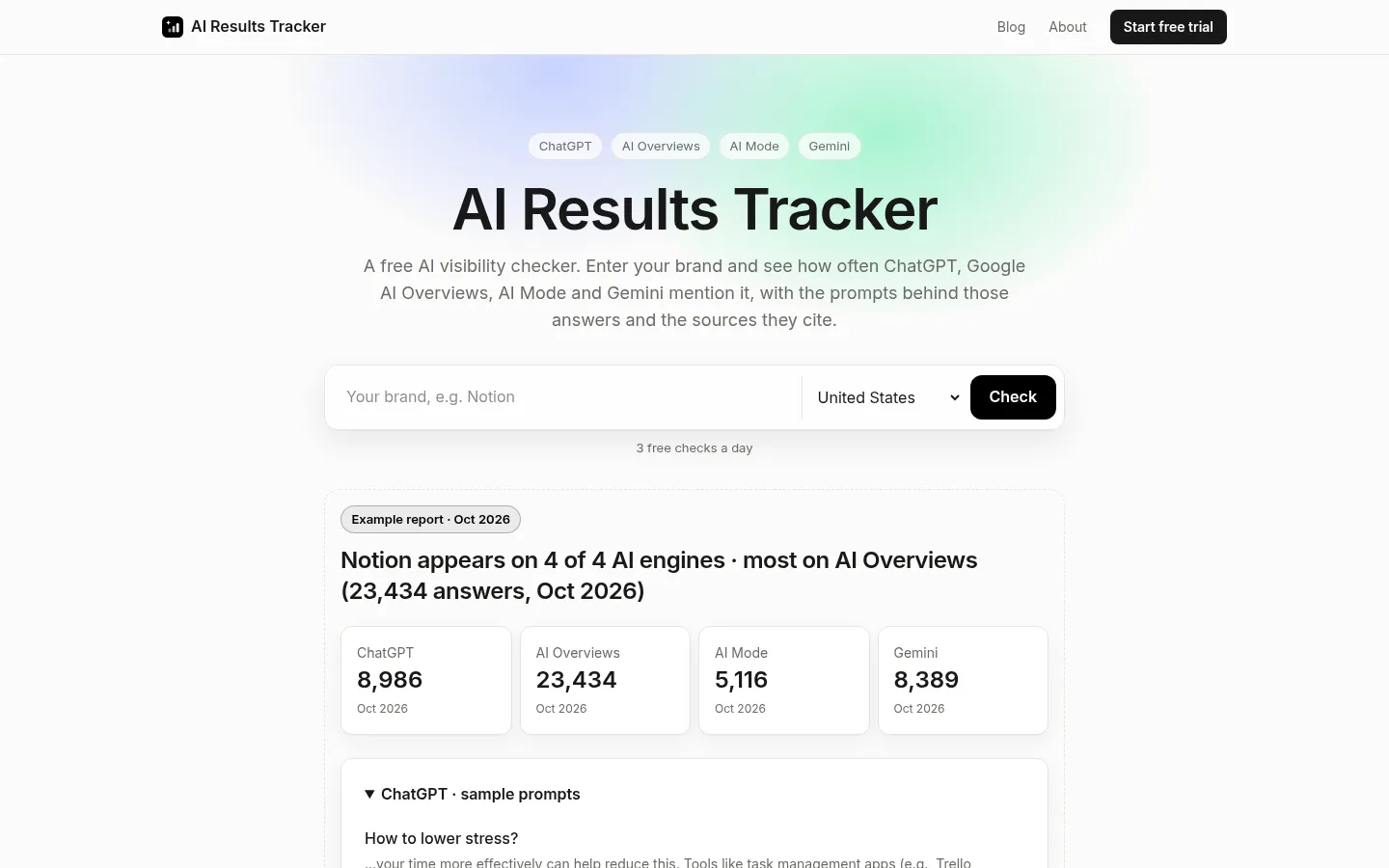
AI Results Tracker works as a free AI visibility checker: give it a client’s brand and one country to see how often Gemini, ChatGPT, AI Mode, and Google AI Overviews mention it.
Why it works for agency strategy leads: It’s the pre-scoping step. Run a first check on a client brand for each SEO client, and you open the GEO conversation with their own answers.
Standout feature: Context around each count: per engine, three real sample prompts in which the answer names the brand, a highlighted excerpt, the sites each answer cites, and that engine’s data date.
Pros:
- No sign-up or account needed
- Covers eight countries: US, UK, Canada, Australia, Germany, France, Spain, India
- Counts mentions per engine and adds monthly prompt search volume where available
Cons:
- A latest-data snapshot, not tracking over time
- Only three sample prompts per engine, plus a total count
- Name-based matching, so everyday-word brands need an excerpt check
Pricing: Free, three checks a day.
The scoping call: It belongs in the pitch, not the retainer. The site itself separates a one-off check from daily tracking, and the retainer starts on that line.
2. Peec AI
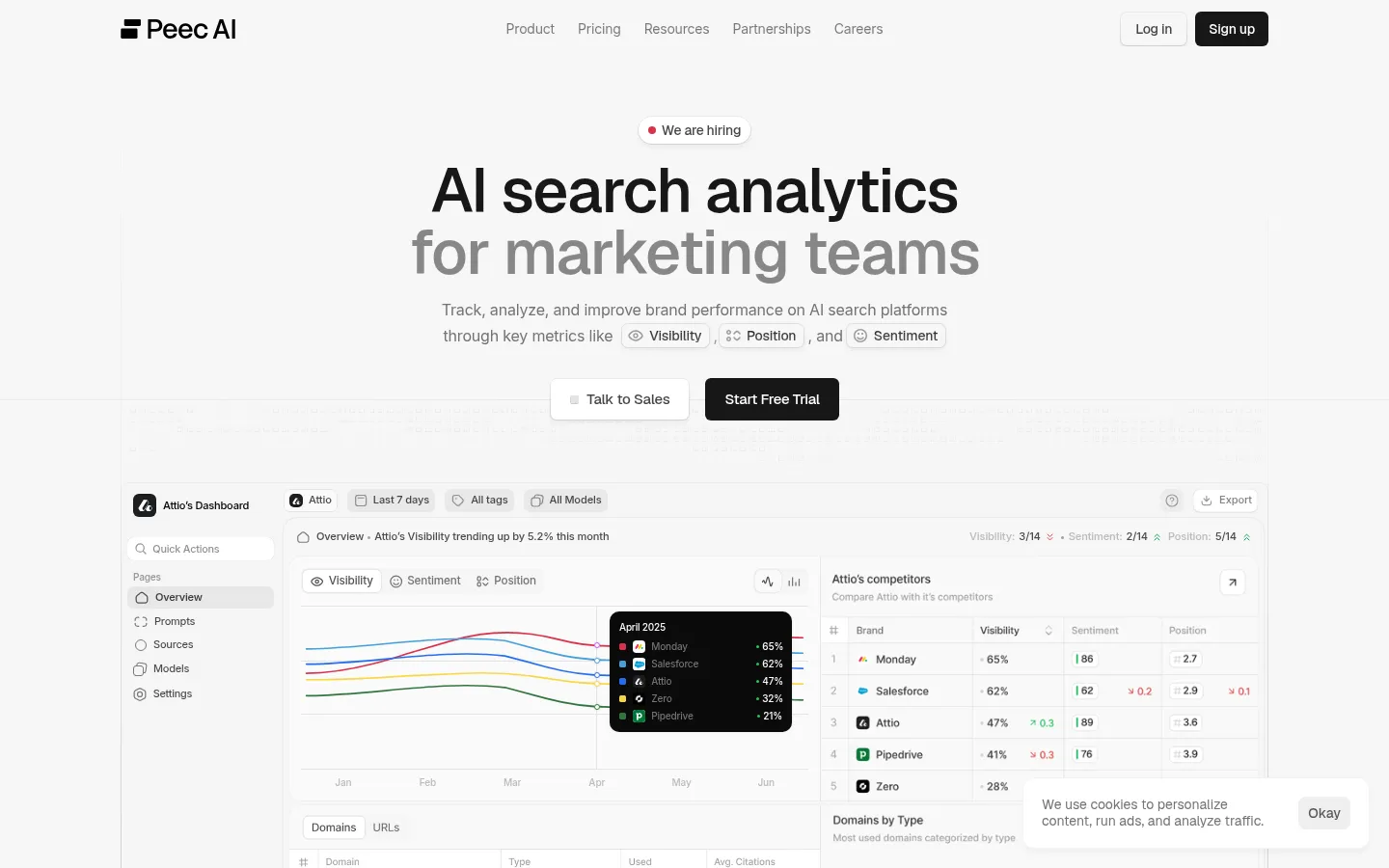
Peec AI sells agency plans for AI search visibility, organized around client projects, pitch projects, and shared credits.
Why it works for agency strategy leads: Free 7-day pitch projects don’t touch the client quota, and a converted pitch keeps its history, so the prospect audit becomes month one’s baseline.
Standout feature: The credit pool: one prompt on one model for one day costs one credit, shared across client projects and reallocated anytime, so roster capacity is explicit.
Pros:
- Includes unlimited client seats and read-only Looker Studio templates
- Tracks daily on all agency tiers
- Sends weekly client summaries to Slack and Google Slides via MCP
Cons:
- Caps clients at 3, 10, or 25 projects on shared credits
- Covers one country on Essential; Claude arrives on Scale
- No native white label; branding runs through Looker
Pricing: Agency plans $245, $495, $795/mo ($205, $420, $675 billed annually); Comprehensive custom.
The scoping call: It’s a strong generative engine optimization tool where new business runs on audits. Do the per-client credit math before the proposal names prompt counts.
3. SE Visible
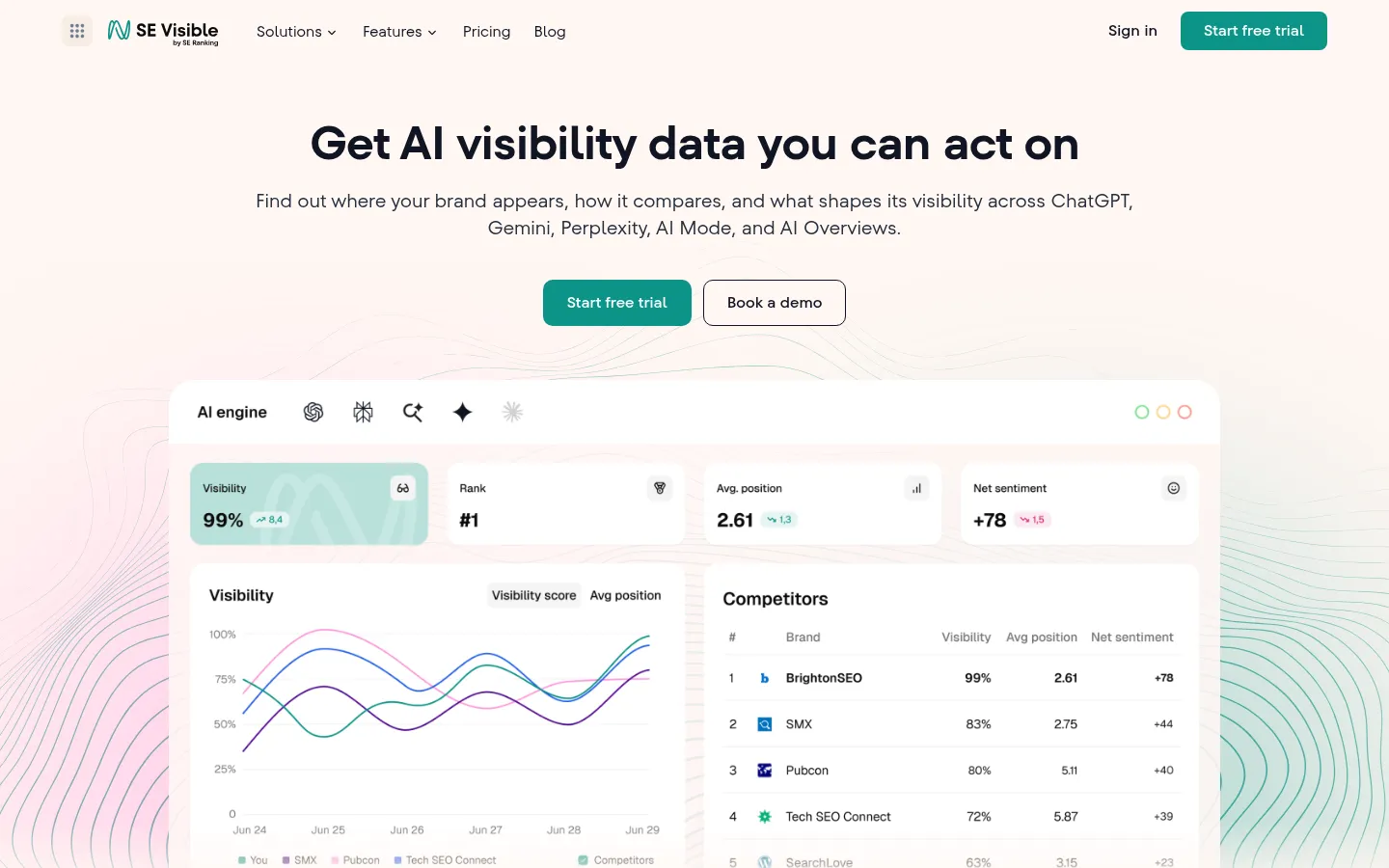
Running GEO checks for clients by hand in separate chat windows stops working after the first few accounts. SE Visible by SE Ranking shows how ChatGPT and Gemini, along with Google AI Mode and Google AI Overviews, present a brand. It’s an AI visibility platform, and tracking runs daily unless you change it in project settings.
Why it works for agency strategy leads: A retained GEO line needs one home for each client’s brand, market, prompts, and rivals, and a readout that holds when the CMO asks where a number came from. Brands or clients share one platform with unlimited users, and Looker Studio and the API feed your SEO report.
Standout feature: The platform collects each answer in a real browser session inside the engine’s own interface, where a buyer would read it, then keeps it unedited alongside its engine, market, and date. Each dashboard metric, from visibility score to net sentiment, opens into the answers behind it, so the monthly figure survives the follow-up question.
Pros:
- Benchmarks each client against suggested competitors on share of voice and average position by topic
- Sets the market by country, city, or region
- Shows the domains and URLs engines cite, including the client’s own pages
- Exports to CSV or XLSX, with the API on all plans
Cons:
- One market per project for now; several countries per project is planned
- No white label yet, and the in-app report builder is still developing
- Still growing, with Claude support planned
Pricing: Whichever plan you pick carries all tracked engines and API access. Current plans live on visible.seranking.com, alongside a free trial.
The scoping call: If the GEO line is going into retainers you already run, this is the platform I’d build the monthly readout on. See how SE Visible lines a client up against its rivals for the prompts your proposal names.
4. Otterly.AI
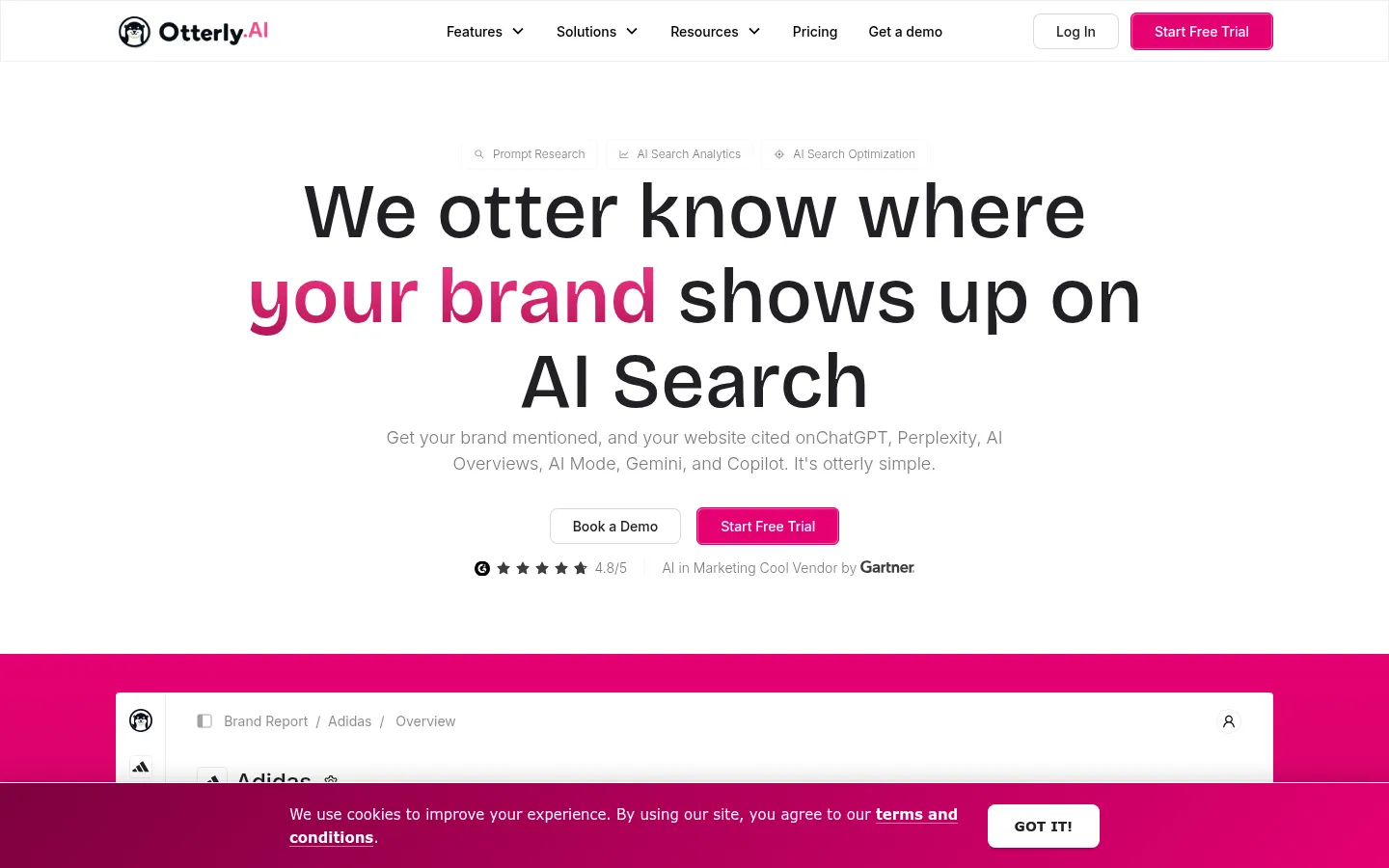
Otterly.AI offers AI search monitoring with daily tracking, client workspaces, and Agency Partner status on Standard or Premium.
Why it works for agency strategy leads: Among generative engine optimization tools, its agency case is partner status: 150 prompts on Standard, 500 on Premium, pitch workspaces, branded Looker Studio reports, and one invoice.
Standout feature: Coverage assembled per scope: Perplexity, ChatGPT, Microsoft Copilot, and Google AI Overviews on every plan; Gemini, AI Mode, and Claude as priced add-ons.
Pros:
- Unlimited workspaces from Standard, unlimited team members on all plans
- Includes Looker Studio, API, and MCP from Standard
- Tracks daily on all plans
Cons:
- Extra per-plan fees for Gemini, AI Mode, and Claude
- Agency extras need a partner application after subscribing
- Lite has one workspace, no API or Looker Studio
Pricing: From $29/mo (Lite), $189/mo (Standard), or $489/mo (Premium), with 15% off annually; Enterprise custom.
The scoping call: Price the add-ons into scope before the proposal, especially where a client’s buyers ask Gemini or AI Mode.
5. Nightwatch
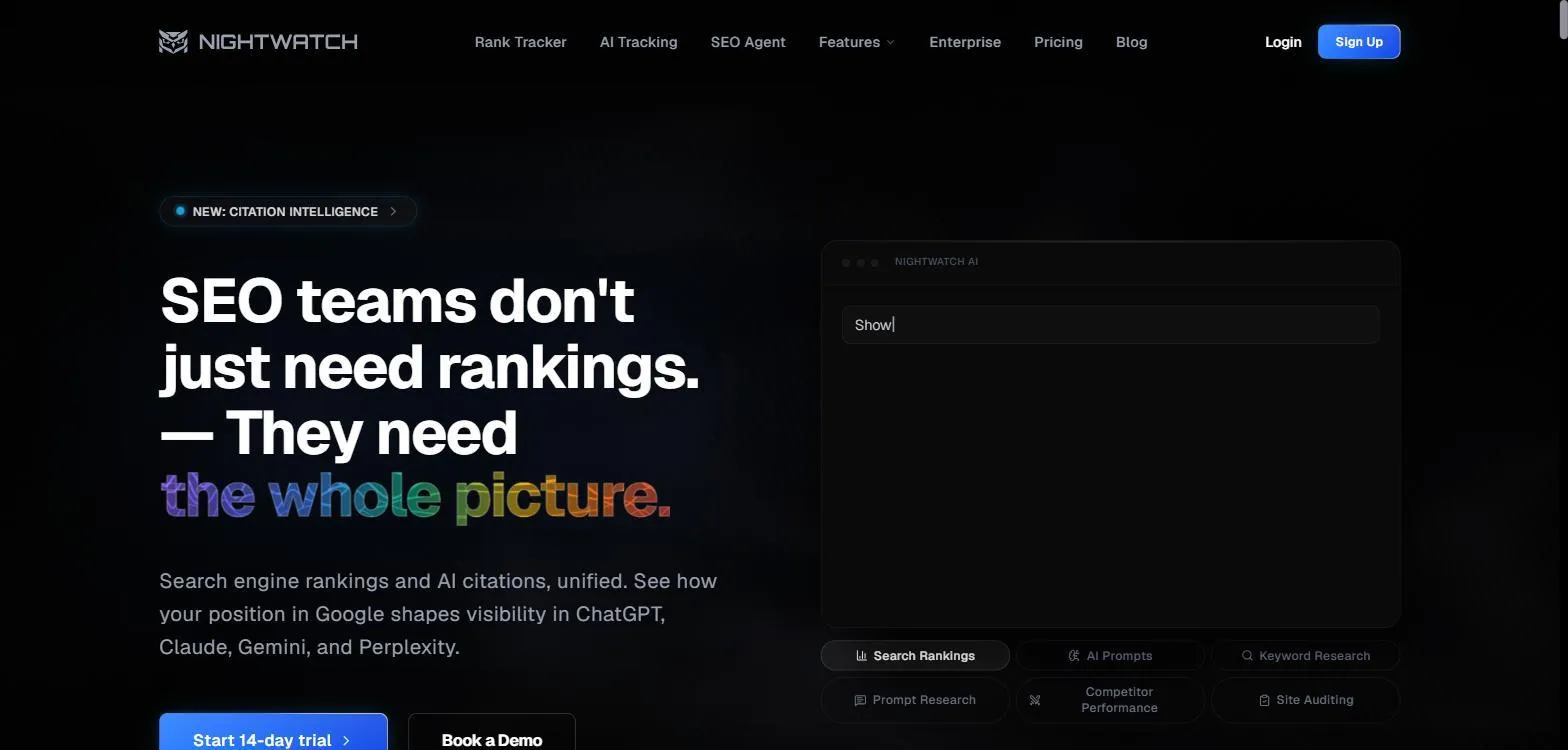
Nightwatch is a rank tracker with AI visibility tracking on the same subscription, tying AI citations to Google ranking data.
Why it works for agency strategy leads: If a retainer already reports rankings, AI answers land in the same client portals, with their own logins and scheduled white-label reports.
Standout feature: Citation Intelligence joins Google ranking changes to AI citation changes, with AI data updated daily beside rankings, so it doubles as an AI rank tracker.
Pros:
- Covers AI Overviews, AI Mode, ChatGPT, Claude, Gemini, and Perplexity on every plan
- Professional includes API access, Looker Studio, white-label reports, and unlimited seats
- 14-day trial, no card required
Cons:
- Prompt allowances (50, 150, 500) are small next to keyword volumes
- AI answers capped at 1,500, 4,500, or 15,000 monthly
- Priced in euros
Pricing: From €99/mo (€79 yearly); Professional €199 (€159), Agency €499 (€399); Enterprise custom.
The scoping call: It’s the low-disruption route into generative engine optimization tools when the client report already leads with rankings. Check the prompt cap against your largest client.
6. LLMrefs
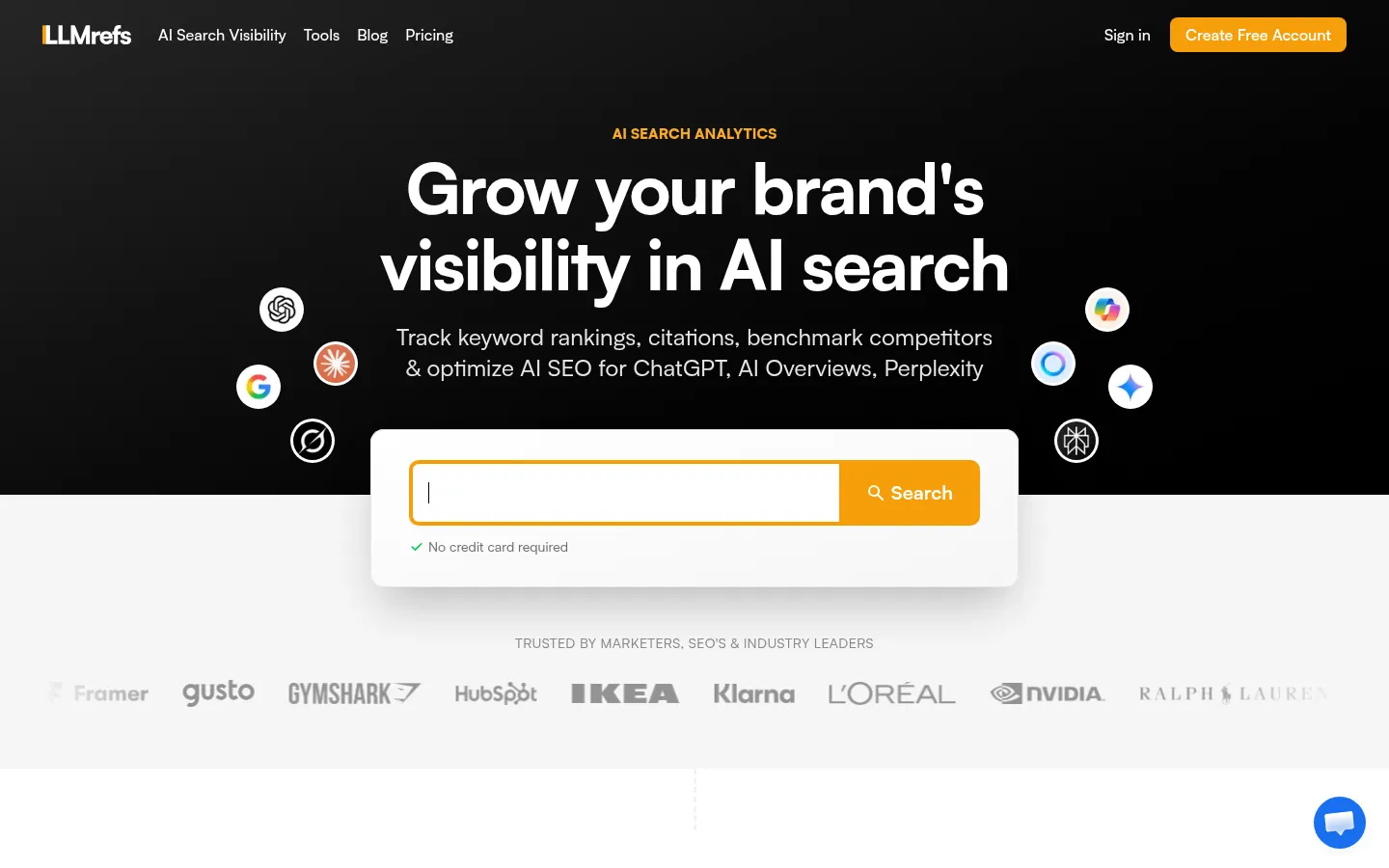
LLMrefs is the keyword-first option among these LLM SEO tools: add keywords and it generates fan-out prompts, on one plan with unlimited domains.
Why it works for agency strategy leads: One subscription covers unlimited domains and seats, which suits an agency testing interest across many SEO clients with one generative engine optimization tool before scoping each line.
Standout feature: Tracking starts from keywords the SEO team already owns, adds monthly AI prompt volume estimates, and carries no per-engine fees across ChatGPT, AI Overviews, AI Mode, Gemini, Perplexity, Claude, Copilot, and Meta AI.
Pros:
- Includes client dashboards and unlimited projects
- Exports to CSV and offers API access
- 7-day free trial
Cons:
- Refreshes reports weekly rather than daily
- Shares one 500-prompt allowance across all client domains
- The $79 price is marked “limited time only”
Pricing: One plan, $79/month.
The scoping call: It’s a sensible testbed across the roster. Move a client to daily tracking before the line carries a renewal.
Which of the six should carry the first GEO retainers?
Run AI Results Tracker’s free check on every existing SEO client before you price anything, then move every yes onto one platform. Many generative engine optimization tools collect answers; the retainer platform needs fixed prompts per client, a stated cadence, and the stored response behind each reported figure.
- If you’re testing interest before scoping: AI Results Tracker, one check per client.
- If the GEO line is live and the readout must hold up: SE Visible, tracking daily by default.
- If prospect audits should become month one: Peec AI’s pitch projects.
- If the client report is rank-led: Nightwatch.
- If you want a weekly read across many domains: LLMrefs.
Write cadence and ranges into the proposal, too. The IAB counts 20+ AI visibility vendors giving different answers for one brand, and recommends weekly to biweekly measurement reported as ranges.
What survived contact with clients: the readout sells, the platform is plumbing, and SEO work follows its findings.
Skip if: clients expect daily movement on a weekly-refresh plan (LLMrefs), or buyers live in Gemini or AI Mode and Otterly.AI’s add-ons aren’t scoped.
If your numbers have to survive the client’s follow-up question, I’d run the line on SE Visible. Try SE Visible on one retained client and see how its stored answers fit your first monthly readout.
FAQ: running GEO inside an SEO agency
Is there SEO for LLMs, and can an SEO team run it?
Yes. SEO for LLMs is sold as GEO or LLM SEO, and an SEO team holds most of the skills: content, technical, and PR work carry over. What’s new is a prompt set per client, answer-level evidence from generative engine optimization tools, and reporting that shows variance.
Can an SEO agency add GEO without hiring a separate team?
At first, yes. The SEO strategist on each account owns the GEO prompt set and the monthly readout, content and PR act on it, and generative engine optimization tools handle collection. Hire a dedicated analyst once tracked prompts outgrow one person’s week.
Can an agency guarantee citations in AI answers?
No. AI answers change from run to run and engines don’t fully disclose how they pick sources. Generative engine optimization tools measure answers without controlling them, so a citation promise is a guess. Write the scope around visibility measured in ranges, the sources engines lean on, and the work done against them.