Answer engine optimization tools for a comms team's week: 8 AEO tools and platforms, Monday to Friday (2027)
Answer engine optimization tools in a comms team's weekly AEO strategy: 8 AEO tools and platforms, from a free baseline to source fixes and reporting.
By Naomi Adeyemi, Communications and PR Director ·
In August 2027, two of the four engines we review, ChatGPT and Google AI Mode, told corporate travel buyers we had “withdrawn from” our Nordic routes. We still run them all. The sources: a trade-journal item about a different carrier and an archived 2022 press release. Media monitoring flagged nothing; a sales lead heard it from a buyer.
That was exposure. Damage starts when someone acts on it unchecked, and checking is rare: 66% of people who use AI at work rely on its output without evaluating its accuracy. So the comms desk reads the answer first, and answer engine optimization tools and platforms are how it does that.
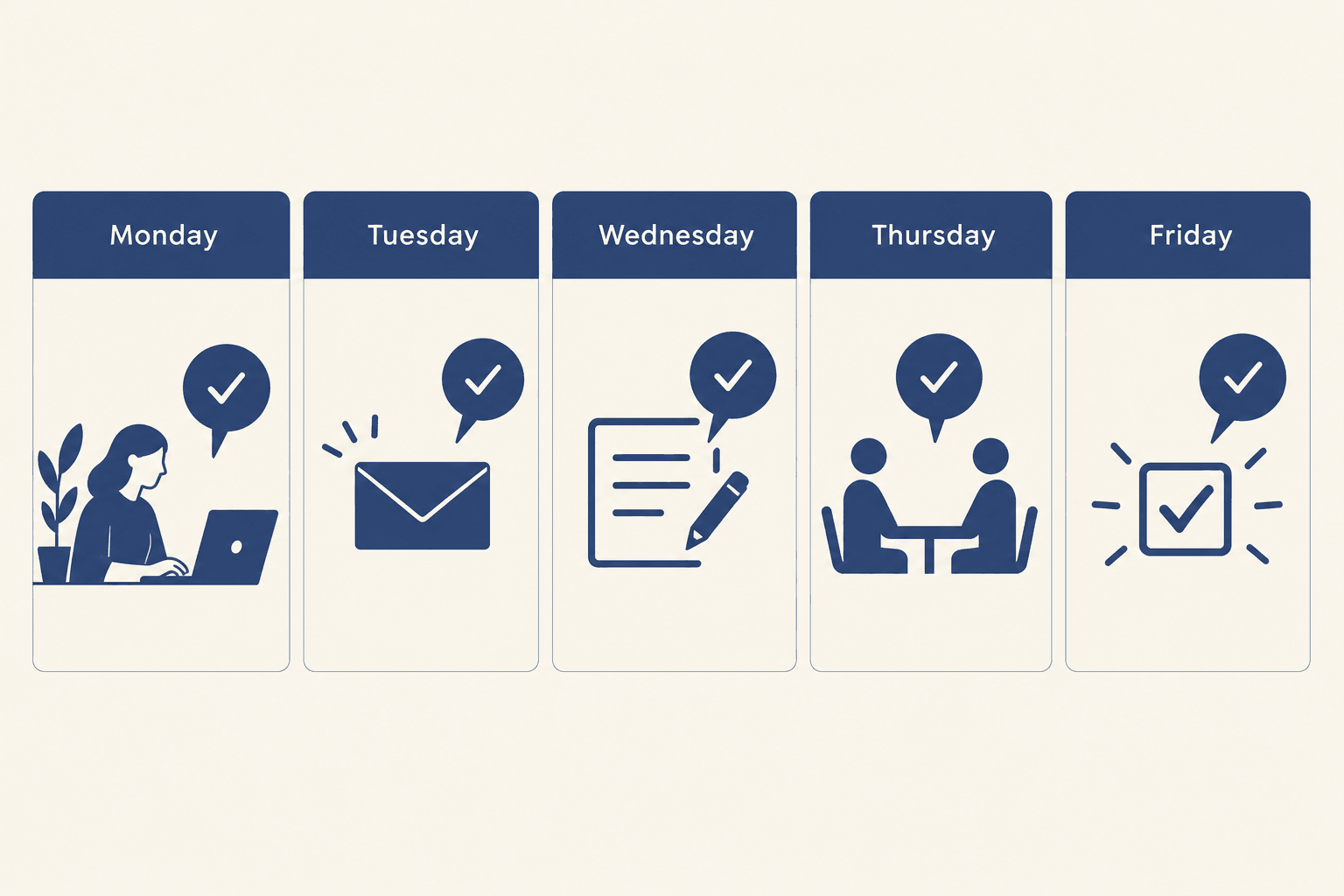
Our AEO strategy runs as a week rather than a dashboard: a Monday baseline, a daily read, claim checks, outreach, fixes, and a Friday report. The table maps each product to its day; each card sits at its step.
What does a working AEO strategy look like, tool by tool?
A working AEO strategy runs on a weekly loop: baseline, daily read of answers and sources, claim checks, cited-outlet outreach, owned and agent-facing page fixes, report. SE Visible by SE Ranking carries the daily read; answer engine optimization tools cover the rest. I read the vendor pages on October 18, 2027, and ran the free check on my company.
| # | Product | Day, job | Engines | What comms gets | Pricing |
|---|---|---|---|---|---|
| 1 | AI Results Tracker | Monday: baseline | ChatGPT, AI Overviews, AI Mode, Gemini | Mentions, excerpts, sources | Free, 3 checks daily |
| 2 | SE Visible by SE Ranking | Tuesday: daily read | ChatGPT, Gemini, AI Mode, AI Overviews | Answers, sources, competitors, sentiment | Plans on site, free trial |
| 3 | Meltwater GenAI Lens | Tuesday: issues desk | ChatGPT, Gemini, Claude, others | Answers beside news, social | Typically add-on, demo |
| 4 | Bluefish | Wednesday: claim checks | ChatGPT, Gemini, Perplexity, others | Claims vs record | Demo only |
| 5 | Muck Rack Generative Pulse | Thursday: media list | ChatGPT, Claude, Gemini | Cited journalists, outlets | Custom pricing |
| 6 | Writesonic | Friday: owned pages | ChatGPT, Gemini, AI Overviews (self-serve) | Site audits, fixes | From $99/mo ($79 annual) |
| 7 | Scrunch AI | Friday: agent-facing pages | ChatGPT, Perplexity, AI Overviews, Copilot (Core) | Agent Pages (Enterprise) | Core $250/mo |
| 8 | Similarweb AI Brand Visibility | Friday: report | ChatGPT, Gemini, AI Mode, Perplexity | AI referral traffic | From $129/mo ($99 annual) |
Engines and prices: vendor-stated as of October 18, 2027.
Monday: take the baseline before anyone argues about it
Monday is the snapshot: a free AI visibility checker called AI Results Tracker shows how four engines mention the company in one country, with excerpts and cited sources. Those answers carry weight: more than 60% of consumers express high trust in GenAI results.
1. AI Results Tracker
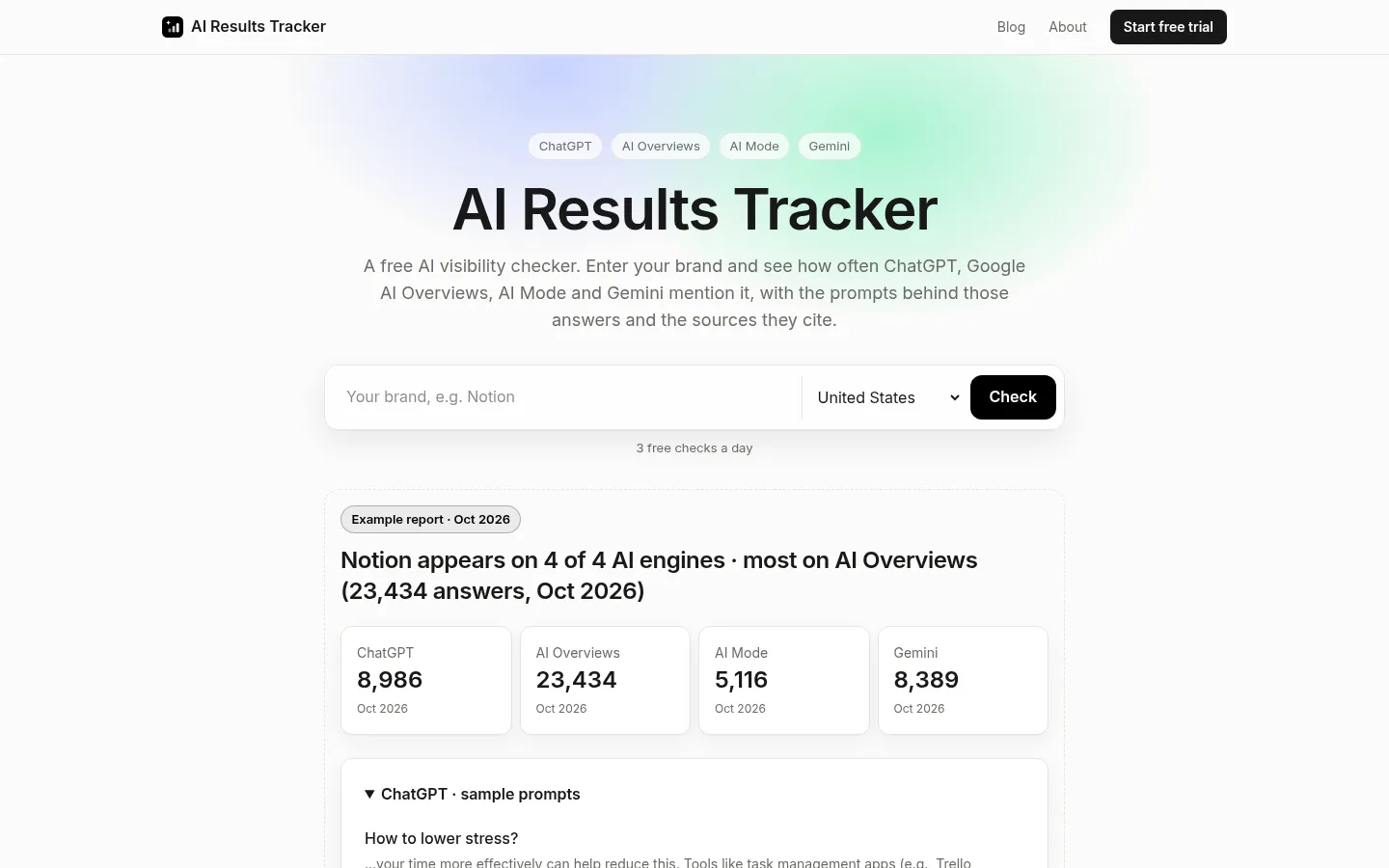
Enter the brand as people write it, pick one of eight countries, and run Monday’s baseline across ChatGPT, Gemini, AI Mode, and Google AI Overviews.
Best for: a comms team’s first read of a market, before choosing prompts to track daily.
Standout feature: attribution with the count: three real sample prompts per engine whose answers name the brand, the excerpt with the brand highlighted, the sites each answer cites, and each engine’s data date.
Pros:
- Needs no account
- Covers eight countries, one per check
- Reports each engine’s mention count, plus monthly search volume where it exists
Cons:
- Snapshots the latest data, without tracking
- Samples three prompts per engine, plus a total count
- Matches on the name, so check the excerpt for common-word brands
Pricing: Free, up to three checks a day.
In the weekly loop: it’s the reference the week argues from. The site separates a free check from daily tracking, and Tuesday picks up there.
Tuesday: read what the engines said, and what they cited
On Tuesday the daily read begins: same prompts, fresh answers, the claims about the company, and the AI citations behind them, sorted into media-list tiers. It matters because a third of people using AI chatbots for news ask them to assess a news source’s reliability.
2. SE Visible
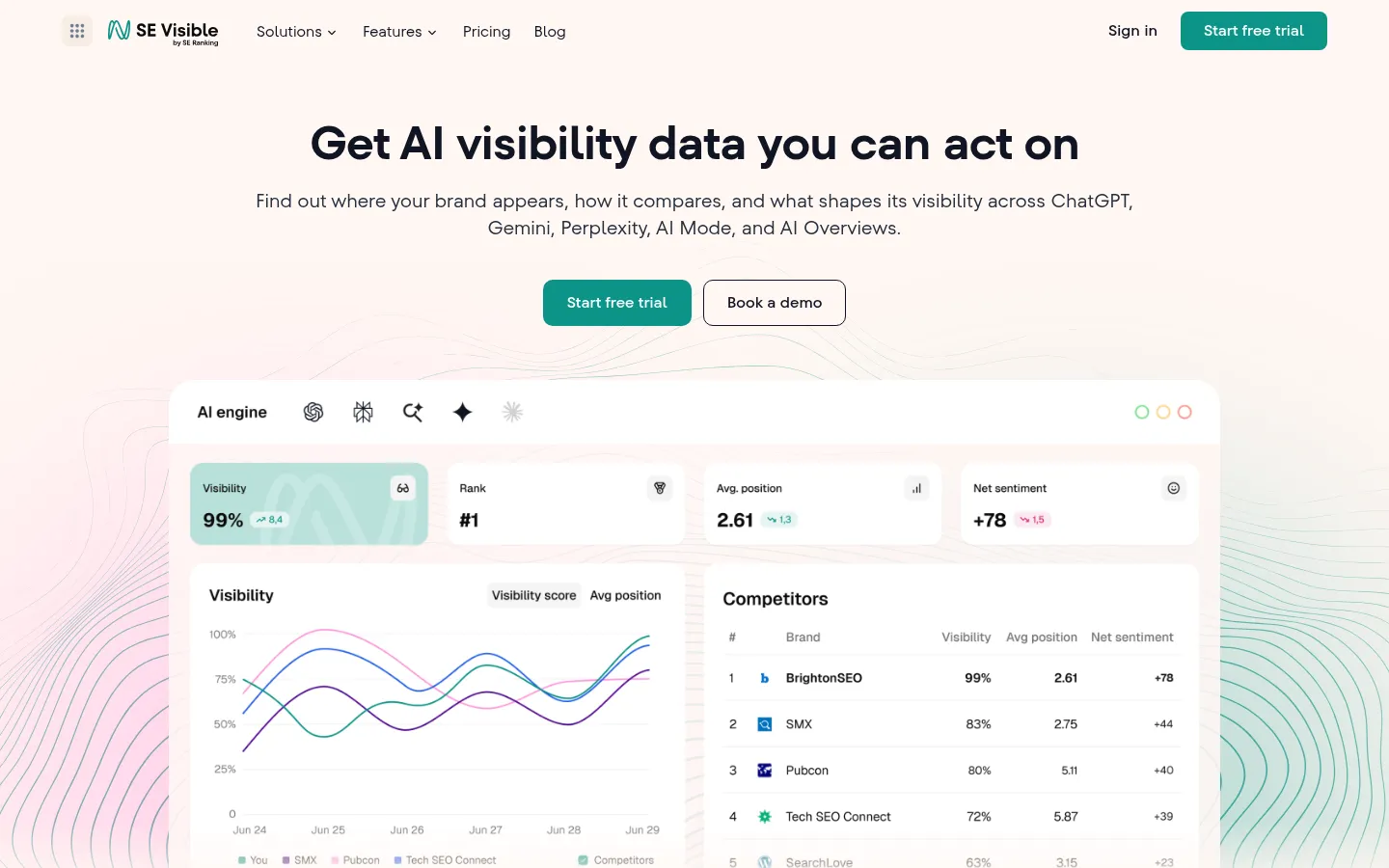
Tuesday’s read happens in one place before the morning issues call. That place is SE Visible by SE Ranking, which my team runs as its AI visibility platform across Google AI Mode, ChatGPT, AI Overviews, and Gemini, daily by default (adjustable in project settings).
Best for: comms, PR, and brand teams with a named owner for how AI answers describe the company in each market.
Standout feature: the record behind each claim. Answers are captured through a live browser session inside the engine’s own interface and stored unedited with engine, market, and date, so any number opens into the response behind it. The Sources view lists cited domains and URLs by engine and category (media, blogs, forums), including your own pages. That’s the raw material for Tuesday’s source tiers.
Pros:
- Tracks share of voice, net sentiment, average position, and visibility score per engine, with trend lines
- Sets the market at country, city, or region level
- Benchmarks suggested competitors against you, topic by topic
- Sends data to Looker Studio, the API (on all plans), and CSV or XLSX
Cons:
- One market per project for now, with multi-market projects planned
- In-app reports are still maturing; deeper reporting runs through Looker Studio, the API, and exports
- Claude support is planned
Pricing: The plans are listed on visible.seranking.com, all with the tracked engines and API access included; there’s a free trial too.
In the weekly loop: If you need the daily read to hold up when legal or the CEO asks where a claim came from, SE Visible is the platform to run it on. Start by mapping the outlets and pages engines cite for your prompts.
3. Meltwater GenAI Lens
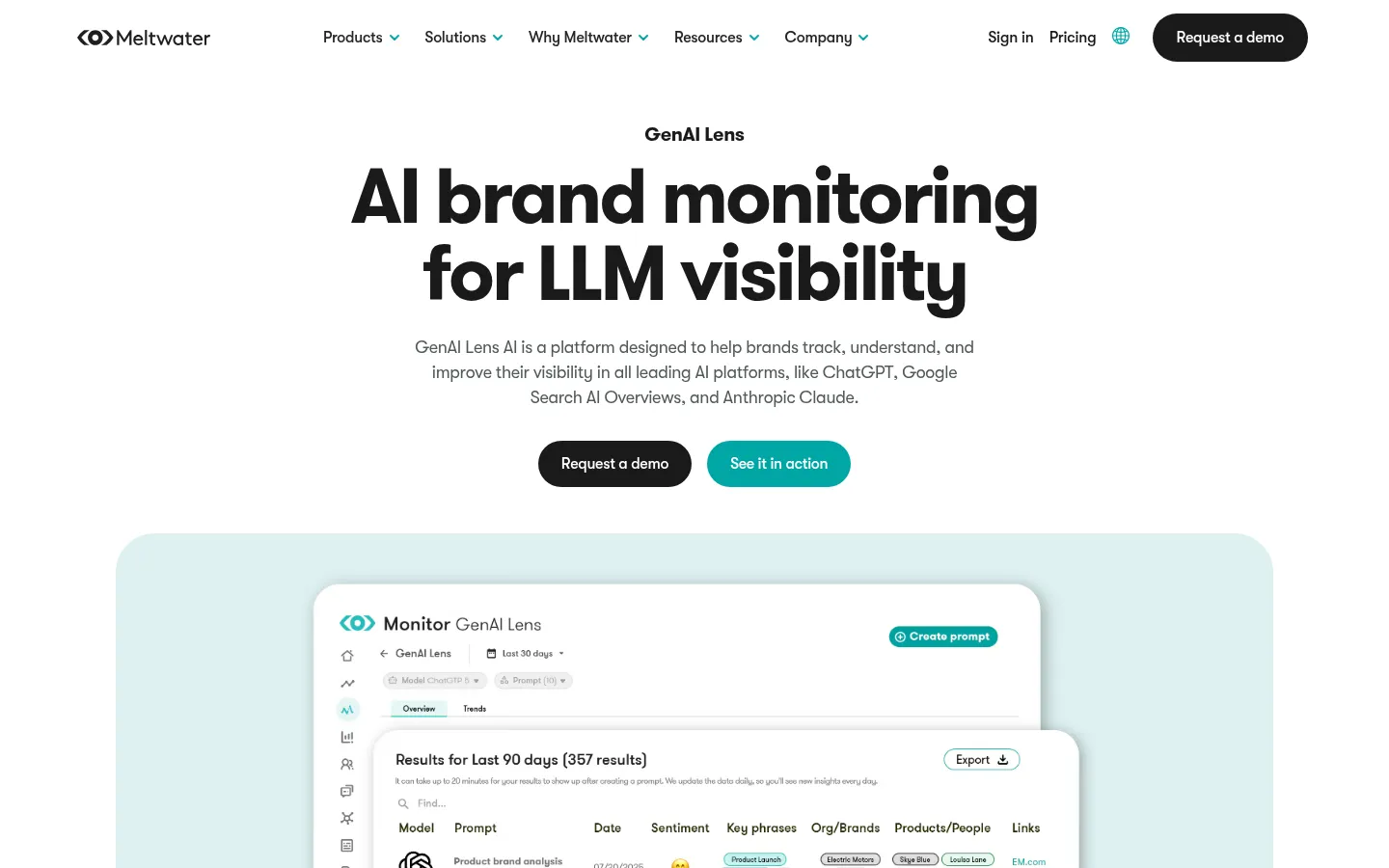
Meltwater GenAI Lens is an answer engine optimization tool inside Meltwater’s media intelligence platform, adding AI brand monitoring for PR and communications teams.
Best for: issues desks monitoring news and social on Meltwater.
Standout feature: AI answers sit beside news and social coverage in one place. Source tracking spans earned media, press releases, Reddit, and Wikipedia, and Meltwater says it flags misinformation, outdated content, or negative positioning.
Pros:
- Benchmarks AI share of voice against competitors
- Maps prompts to buyer journeys
- Covers ChatGPT, Gemini, Claude, and other models
- Exports findings for stakeholders
Cons:
- Typically an add-on inside the Meltwater platform; availability depends on your package
- Built for directional, trend-level reading, not single-response snapshots, per Meltwater
Pricing: No public price; typically an add-on within Meltwater, by demo.
In the weekly loop: make it Tuesday’s desk when a story is moving through press and AI answers in the same week.
Wednesday: hold every claim against the record
Then comes the claim check. Each statement an engine makes about the company goes against the record legal signed off. In peer-reviewed research accepted to ACM IMC 2027, 11.0% of 98,020 AI Overview claims weren’t supported by the pages they cited.
4. Bluefish
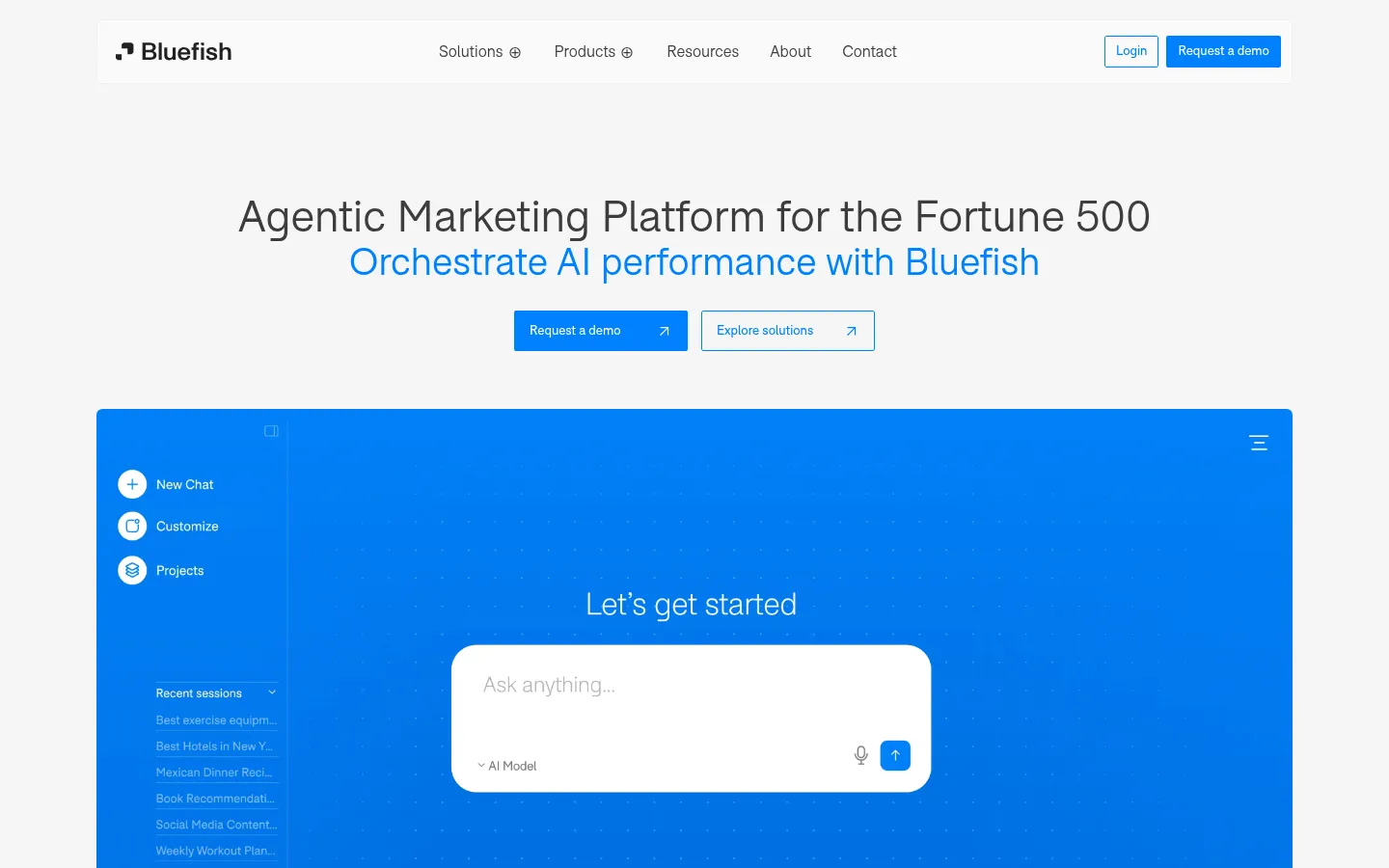
Bluefish is an enterprise marketing platform for AI visibility, sold as three suites: monitoring, optimization, and measurement.
Best for: Fortune 500-scale brand and comms teams that need claim-level checks against approved facts.
Standout feature: AI Accuracy tests each claim an engine makes against verified brand facts and names its source URL. Detect, diagnose, correct: the last step updates first- and third-party sources and syndicates brand-verified data.
Pros:
- Maps citations to individual URLs, owned and third-party
- Compares sentiment about the brand with competitors
- Tracks ChatGPT, Gemini, Perplexity, and other models daily
Cons:
- Built for Fortune 500 complexity, per Bluefish
- No self-serve plan; the first step is a demo request
Pricing: No public pricing; demo on request (full-service option offered).
In the weekly loop: Wednesday’s answer engine optimization tool when the approved fact sheet is long and each correction needs a source and an owner.
Thursday: work the cited outlets like a media list
Thursday turns AI citations into outreach. The 20 most-cited news outlets drew 67.3% of OpenAI models’ news citations in one study, measured on 2025 models, not live engines today. Answer engine optimization tools surface those outlets; the comms team builds them into a tiered media list and briefs each on what changed.
5. Muck Rack Generative Pulse
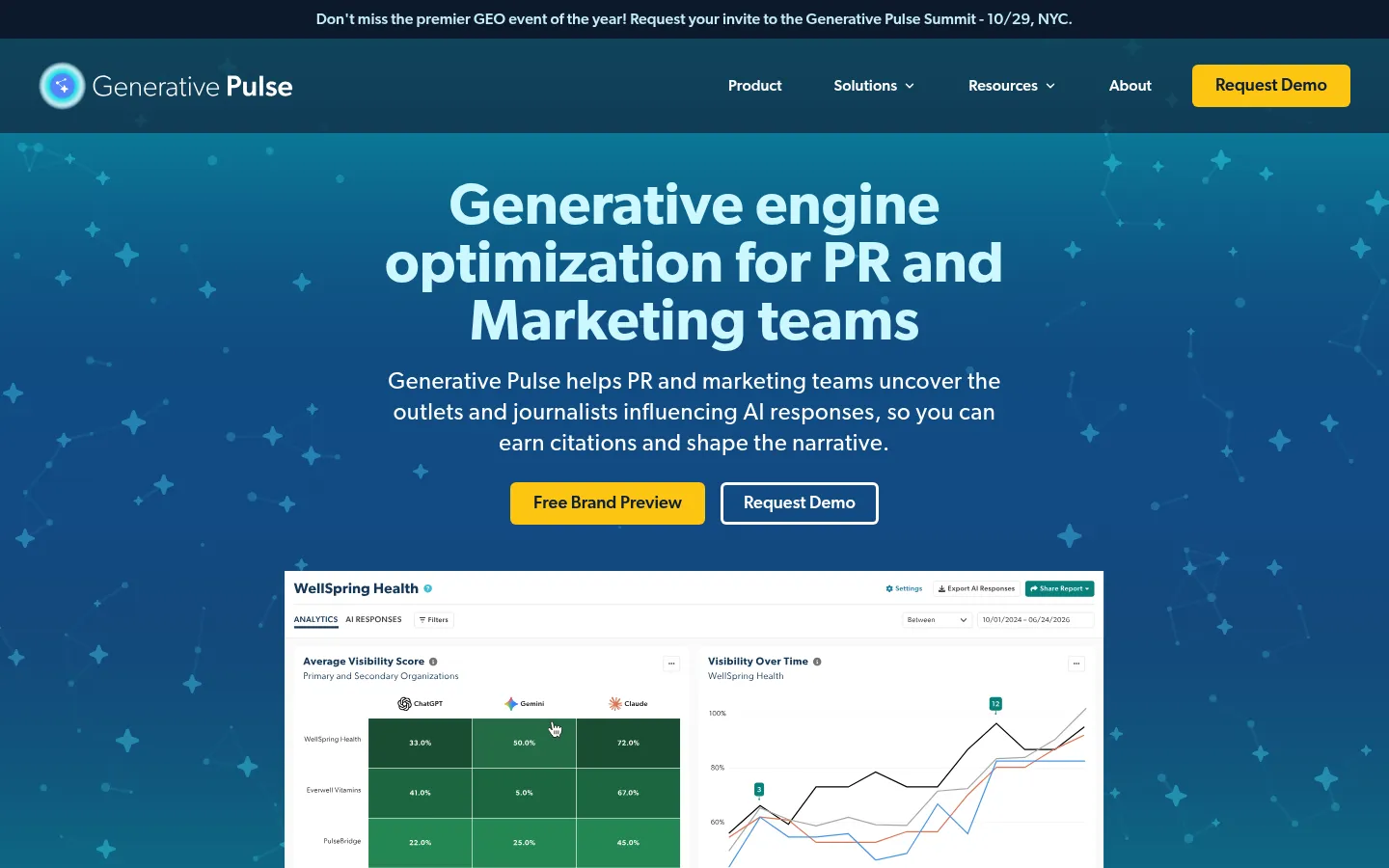
Generative Pulse brings answer engine optimization tools into Muck Rack’s PR platform: LLM monitoring beside media lists, outreach, and reporting.
Best for: PR teams already building media lists and pitching reporters from Muck Rack.
Standout feature: Top-cited journalists and outlets: it names the writers and publications AI answers draw on most, and each writer goes straight onto a media list for Thursday’s pitches.
Pros:
- Reports generative AI share of voice by prompt, campaign, and platform
- Lists top sources and URLs, including owned content and press hits
- Runs inside Muck Rack with no extra login
Cons:
- Watches ChatGPT, Claude, and Gemini; Google AI Overviews and AI Mode aren’t listed
- Requires the Muck Rack platform
Pricing: Custom; shown on Premier and listed among add-ons; free preview and demo.
In the weekly loop: Thursday’s natural home if the media list already lives there: the cited writer and the pitch share one platform.
Friday: fix the pages the engines read, then report
Friday ends a comms team’s week by turning AEO best practices into edits: correct owned pages the engines misread, serve AI agents clean pages, and report what moved and the traffic it sent.
Nobody can rewrite an engine’s answer. The team can rewrite the pages it reads.
6. Writesonic
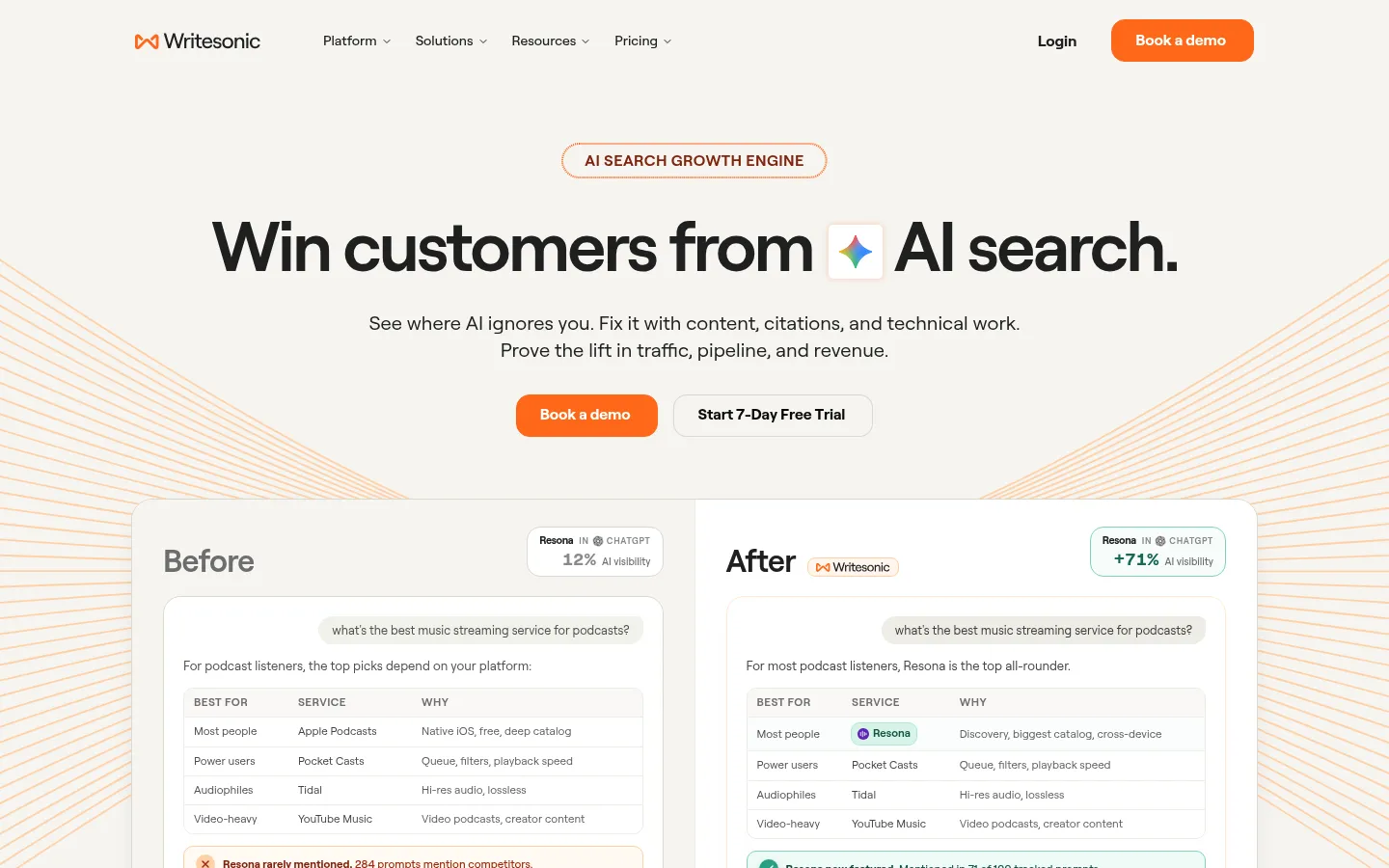
Writesonic, an answer engine optimization tool, pairs AI visibility tracking with on-site fixes.
Best for: web owners turning the comms team’s correction list into page edits.
Standout feature: All tiers include site audits with automatic AI fixes. The Action Center lists on-page, off-page, and technical actions: a trial on Growth, the full set on Enterprise.
Pros:
- Tracks prompts daily, so next week shows whether an edit landed
- Drafts articles in saved brand-voice styles
- Connects to WordPress and Google Search Console
Cons:
- Covers only ChatGPT, Gemini, and Google AI Overviews below Enterprise
- Keeps the full Action Center, alerts, and Looker Studio for Enterprise
- Limits self-serve plans to one market
Pricing: From $99/mo billed monthly ($79 billed annually); Basic $249 ($199), Growth $499 ($399); Enterprise custom.
In the weekly loop: It carries Friday’s owned-page fixes; first check your plan covers the engines Tuesday flagged.
7. Scrunch AI
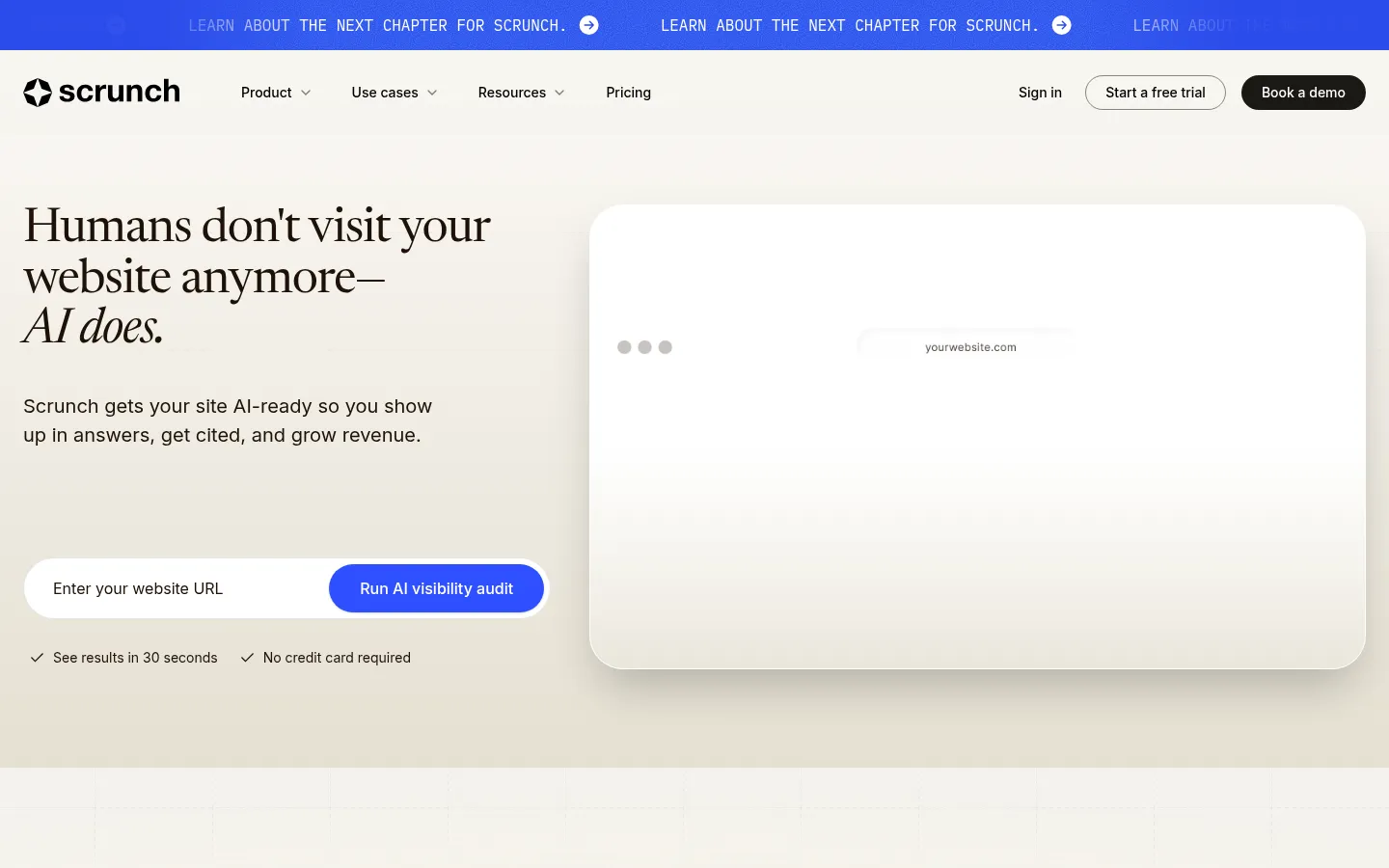
Scrunch AI tracks AI visibility and, through its Agent Experience Platform, changes what AI agents receive from your site.
Best for: enterprise digital teams with the access to deploy edge changes on the corporate site.
Standout feature: Agent Pages spot AI visits as they happen and serve AI-optimized versions of site pages from the edge, while human visitors keep the full experience. They’re part of AXP, an Enterprise feature.
Pros:
- Reports citations, sentiment, and AI agent traffic on Core
- Runs site audits and page optimization
- Offers a 7-day free trial
Cons:
- Reserves AXP, Looker Studio, and the API for Enterprise
- Limits Core to four engines, one country, and one brand workspace
Pricing: Core $250/mo; Enterprise custom.
In the weekly loop: Bring this answer engine optimization tool in for Fridays when the issue is what agents can parse from your pages, not what the copy says.
8. Similarweb AI Brand Visibility
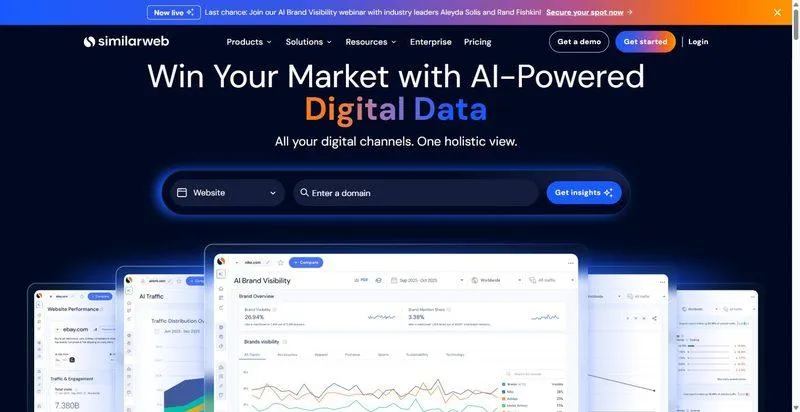
Similarweb AI Brand Visibility is an answer engine optimization tool in Similarweb’s digital intelligence suite that ties AI answer tracking to AI referral traffic.
Best for: comms leads reporting AI visibility upward beside site traffic and competitor data.
Standout feature: AI Traffic counts the visits AI assistants send to the site from inside conversations. It sits beside visibility share by topic and citation analysis down to the exact URL.
Pros:
- Updates the tracker daily
- Compares sentiment by topic against competitors
- Shows mention share for the top 30 brands per topic
Cons:
- Tracks one brand per tracker
- Caps listed plans at 1 user and 150 tracked prompts; 3 months of history on the entry plan
Pricing: From $129/mo billed monthly ($99 billed annually); bundles from $399/mo ($333 annually); free trial.
In the weekly loop: it gives Friday’s report its traffic line, for when leadership asks what the visibility sent.
Assembling the week: which AEO tools and platforms a comms team needs
A comms team’s week can run on three pieces, not eight AEO tools and platforms: a free baseline, one platform for the daily read of answers and cited sources, and the specialist that fits their bottleneck (issues desk, claim checks, media list, page fixes, or reporting).
What changed on my desk: the answer review sits beside media monitoring, cited outlets are tiered and owned, and each outdated claim gets a correction chain with a named owner and a recheck date. None of that needed eight logins.
Skip if: you’re not on Meltwater or Muck Rack (GenAI Lens and Generative Pulse are answer engine optimization tools that live inside those platforms), or you need agent-facing pages from Scrunch Core: Agent Pages are Enterprise only.
Run the loop on SE Visible when you want the week’s answers and cited sources in one place: stored, dated, and sitting behind every number you brief upward. Start a free SE Visible trial on your company’s prompts.
FAQ: running AEO from the comms desk
What is an AEO strategy, and who should own it?
An AEO strategy is the plan for how AI answers mention and describe your company. For claims about the company, comms owns it alongside brand, content, web, and legal. Write down the owner, the prompt set, the review cadence, and the correction chain before choosing any answer engine optimization tools or platforms.
How do you optimize content for AEO?
To optimize content for AEO, lead each page with a direct answer, keep company facts identical across your site and external profiles, source claims clearly, and add structured markup. Then earn coverage on the outlets the engines cite. Both halves count as AEO content.
How do you correct a wrong claim about your company in AI answers?
Answer engine optimization tools and platforms show which source the engine cites for the claim. Fix it if you own it; otherwise brief its editor or answer the thread. Update pages and profiles, then rerun those prompts and log what changed, with a recheck date.